
 English
 Views: 218 Author: DEYUAN 041 Publish Time: 2026-06-22 Origin: Site

On the open seas, a reliable ventilation system is more than just hardware; it is the vital "respiratory system" of a ship. Deyuan Marine, a premier name in maritime equipment, continues to set industry benchmarks with its range of marine fans engineered to withstand the harshest salt spray and most volatile maritime environments.
A Comprehensive Portfolio for Every Maritime Challenge
Deyuan offers a versatile lineup of axial and centrifugal fans designed to meet the rigorous demands of modern naval architecture, from routine cabin airflow to heavy-duty boiler exhaust:
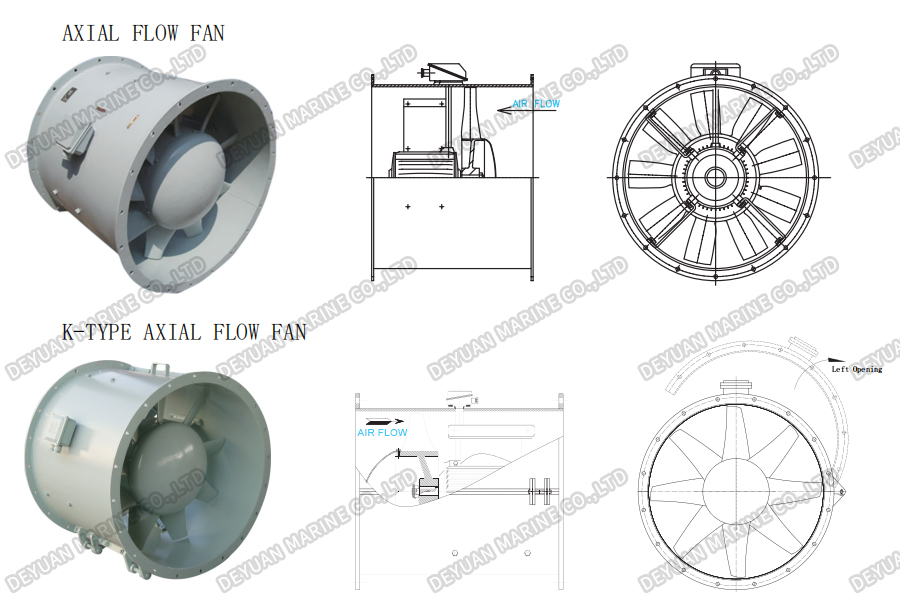
The Flagship JCZ (CZ) Series (Axial Fans): Built for resilience, these fans thrive in environments thick with salt mist, oil vapor, or mildly acidic gases. With an expansive airflow range of 350 to 138,000 m³/h and power ratings from 0.25 to 55 kW, the JCZ series is the trusted backbone for shipyards worldwide.
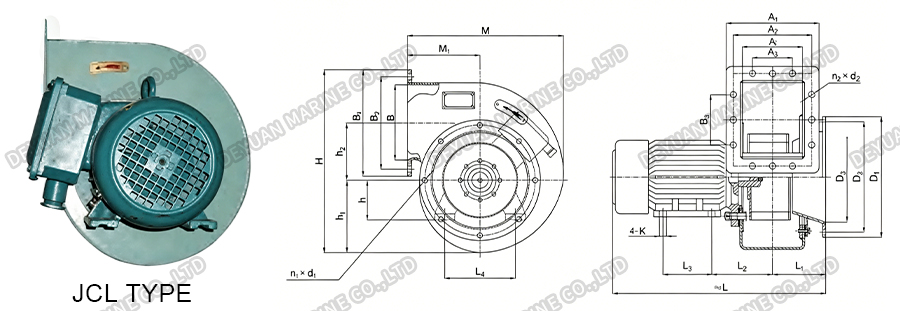
The JCL (CLQ) Series (Centrifugal Fans): When deep exhaust or high-pressure gas handling is required, the JCL series provides the necessary force to maintain safety and air purity in complex internal structures.
High-Safety Explosion-Proof Series
CBZ Series Explosion-Proof Axial Fans: Specifically engineered for oil tankers, chemical vessels, and high-risk pump rooms to ensure operational safety in flammable and explosive atmospheres.
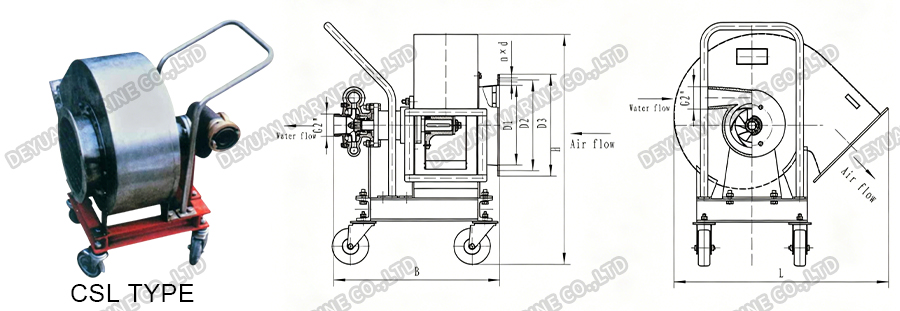
Water-Driven Explosion-Proof Fans: Includes the CBL and CBGD series, along with CSZ (Axial) and CSL (Centrifugal) series. These units utilize water power for propulsion, providing an intrinsically safe ventilation solution for specialized hazardous environments.
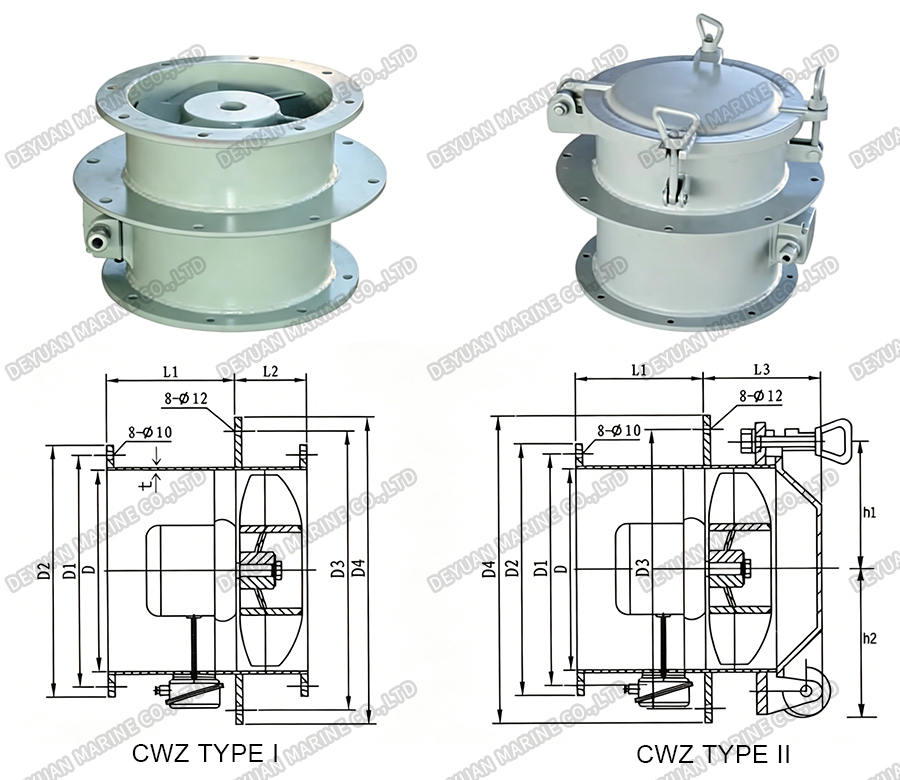
The CWZ Series (Small Axial Fans): Recognizing that space is a luxury at sea, these compact units are ideal for galleys, bathrooms, and meeting rooms. With power consumption as low as 0.04 to 0.25 kW, they enhance onboard livability without excessive noise or energy drain.
Certified Engineering for Global Standards
Safety and comfort are at the core of our precision engineering. Our marine fans are designed to comply with international regulations and have obtained type approval from major classification societies, including CCS, DNV, LR, ABS, BV, RINA, and NK. By combining thermal integrity and structural reliability, Deyuan ensures that every vessel remains a safe environment for its crew.
A Decade of Global Trust
"At Deyuan Marine, we don't chase fleeting trends; we perfect the engineering that keeps ships moving," says a company spokesperson. "For over a decade, our fans have navigated every corner of the globe, proving their reliability in the most demanding conditions".
Today, Deyuan’s footprint spans the maritime hubs of Norway, the United States, Indonesia, Vietnam, the Philippines, and beyond. From the North Atlantic to the South China Sea, Deyuan Marine remains a steadfast guardian of maritime safety and comfort.
About Deyuan Marine Deyuan Marine is a professional supplier specializing in marine and offshore equipment. In addition to high-performance ventilation systems, we provide a full range of maritime solutions including marine fire doors (A60/A30 rated), deck machinery, and outfitting equipment.
FAQ-Marine Fan
Q1: What is a marine fan and how is it different from a standard industrial fan?
A marine fan is a ventilation device specifically designed for use on ships, offshore platforms, and other maritime environments. Unlike standard industrial fans, marine fans are built with enhanced corrosion-resistant materials (such as stainless steel or coated aluminum) to withstand high humidity and salt spray. They also feature higher protection ratings (e.g., IP56) for water ingress resistance, and in many cases, explosion-proof designs for safe operation in hazardous areas like engine rooms. Additionally, they must comply with strict classification society rules (e.g., CCS, DNV, BV).
Q2: What are the main types of marine fans available?
A: The two primary types are:
1.Axial Fans: These move air along the axis of the fan and are ideal for high-flow, low-pressure applications such as general cabin ventilation and cargo hold air exchange.
2.Centrifugal Fans: These move air radially (perpendicular to the intake) and are better suited for high-pressure applications, such as boiler combustion air supply, air conditioning systems, and ducted ventilation where resistance is high.
Q3: What certifications are required for marine fans?
A: Marine fans must be certified by recognized classification societies to ensure they meet maritime safety and performance standards. Commonly required approvals include:
1.CCS (China Classification Society)
2.DNV (Det Norske Veritas) – now DNV GL
3.BV (Bureau Veritas)
4.ABS (American Bureau of Shipping)
5.LR (Lloyd's Register)
The specific certification required depends on the vessel's flag state and the installation area on board. Always confirm the required class certificate with your shipyard or design institute before purchasing.
Q4: What does "explosion-proof" mean for a marine fan, and when is it required?
A: An explosion-proof marine fan is designed with special motor enclosures and spark-resistant components (e.g., aluminum or bronze impellers) to prevent ignition of flammable gases or vapors. This is mandatory for areas classified as hazardous zones, such as:
*Engine rooms with fuel oil lines
*Pump rooms
*Cargo tanks on tankers
*Battery rooms
These fans typically carry additional certifications like ATEX or IECEx to verify their suitability for explosive atmospheres.
Q5: What maintenance is recommended for marine fans in a saltwater environment?
A: Regular preventive maintenance is critical to extend service life. Key recommendations include:
1.Weekly: Listen for abnormal noise or vibration, and check motor temperature.
2.Monthly: Inspect and clean the impeller and housing to remove salt deposits, dust, or marine growth.
3.Quarterly: Check and tighten all electrical connections; lubricate bearings if required by the manufacturer.
4.Annually: Perform a full insulation resistance test on the motor and inspect for corrosion on the casing and mounting brackets. Apply anti-corrosive coating as needed.Always follow the specific maintenance schedule provided in the product manual.