
 English
 Views: 108 Author: DEYUAN 041 Publish Time: 2026-07-24 Origin: Site

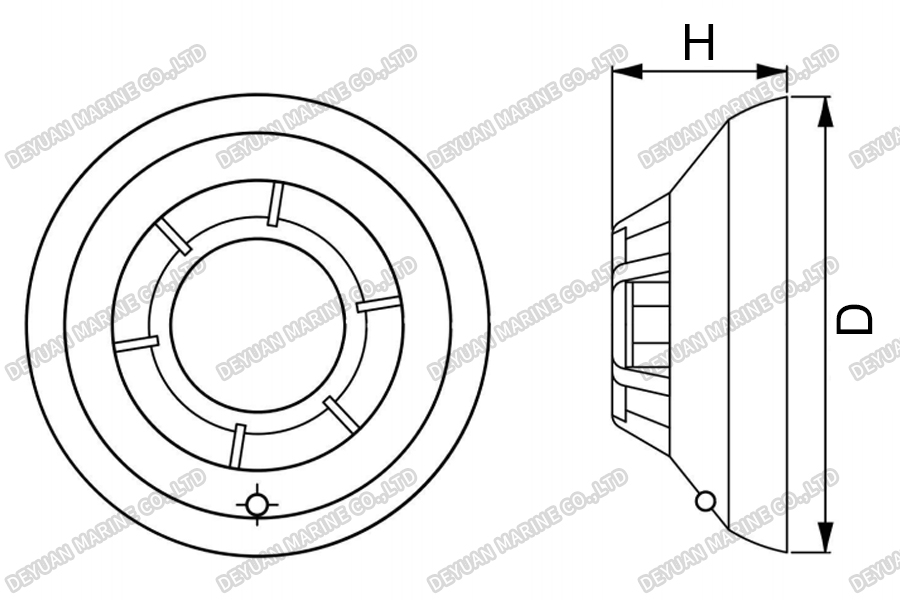
Deyuan offers both ionisation and optical smoke detectors. The ionisation model employs a dual-chamber system with an Americium-241 source. Smoke reduces ion current, triggering an alarm at a preset threshold. An integrating variant allows a 20-second delay to avoid false alarms from transient smoke. The optical detector uses an infrared LED and photodiode at an obtuse angle; smoke scatters light to the photodiode, and two consecutive pulses confirm an alarm.
Both types operate on a 17-28V DC polarity-insensitive supply, with quiescent current of 30-45 μA and alarm current up to 61 mA. Reset requires a 1-second power interruption. Ionisation units work from -20°C to +60°C with automatic temperature and pressure compensation; optical detectors are insensitive to wind and pressure. Both meet EN54, LPCB and VdS approvals, with IP43 rating. Deyuan ensures reliable, versatile smoke detection for all applications.
Smoke Detectors -FAQ
1. What is the difference between ionisation and optical smoke detectors?
Ionisation detectors are more responsive to fast-flaming fires with small combustion particles (e.g., paper, wood, grease fires). Optical (photoelectric) detectors are more responsive to slow-smouldering fires with larger smoke particles (e.g., burning upholstery, wiring insulation). For maximum protection, many experts recommend using both types or choosing a dual-sensor unit.
2. Where should I install smoke detectors in my home?
Install smoke detectors on every level of your home, including the basement. Place them inside each bedroom and outside sleeping areas in hallways. For ceiling mounting, keep them at least 30 cm (12 inches) away from walls and corners. For wall mounting, position them 10–30 cm (4–12 inches) below the ceiling. Avoid installing near windows, doors, air vents, or ceiling fans, as airflow can interfere with detection.
3. How many smoke detectors do I need?
A typical home requires at least one detector per floor, plus one in each bedroom and one outside each sleeping area. For a standard 3-bedroom, 2-storey house with a basement, the recommended minimum is 5–6 units. Always check your local building codes for specific requirements.
4. How often should I test my smoke detector?
Test your smoke detector at least once a month by pressing and holding the "Test" button until the alarm sounds. If the sound is weak or absent, replace the battery immediately. For hardwired units with battery backup, test them monthly as well to ensure the backup power is functional.
5. What causes false alarms, and how can I prevent them?
Common causes include cooking smoke, steam from showers, high humidity, dust accumulation, and insects inside the sensor chamber. To prevent false alarms:
*Install a photoelectric detector near kitchens (less sensitive to cooking fumes).
*Use the "Hush" or "Silence" button when cooking to temporarily desensitise the unit.
*Vacuum the detector cover monthly to remove dust and cobwebs.
*Relocate detectors at least 3 metres (10 feet) from cooking appliances.
6. How long does a smoke detector last?
Most smoke detectors have a 10-year service life from the date of manufacture. After 10 years, the sensor degrades and may not respond reliably. Replace the entire unit even if it appears to work – a label on the back shows the production date. Some newer models include an end-of-life warning chirp to remind you.
7. Can I replace just the battery, or do I need a new unit?
You can replace the battery in most models (typically 9V or AA). However, the entire detector must be replaced every 10 years regardless of battery status. For units with sealed 10-year lithium batteries, you cannot replace the battery – you must replace the whole detector when the battery dies.
8. What should I do when the smoke detector alarms?
If it's a real fire:
*Evacuate everyone immediately following your escape plan.
*Close doors behind you to contain the fire.
*Call emergency services from outside.
*Do not re-enter the building.