 English
Views: 200 Author: DEYUAN 041 Publish Time: 2026-10-26 Origin: Site

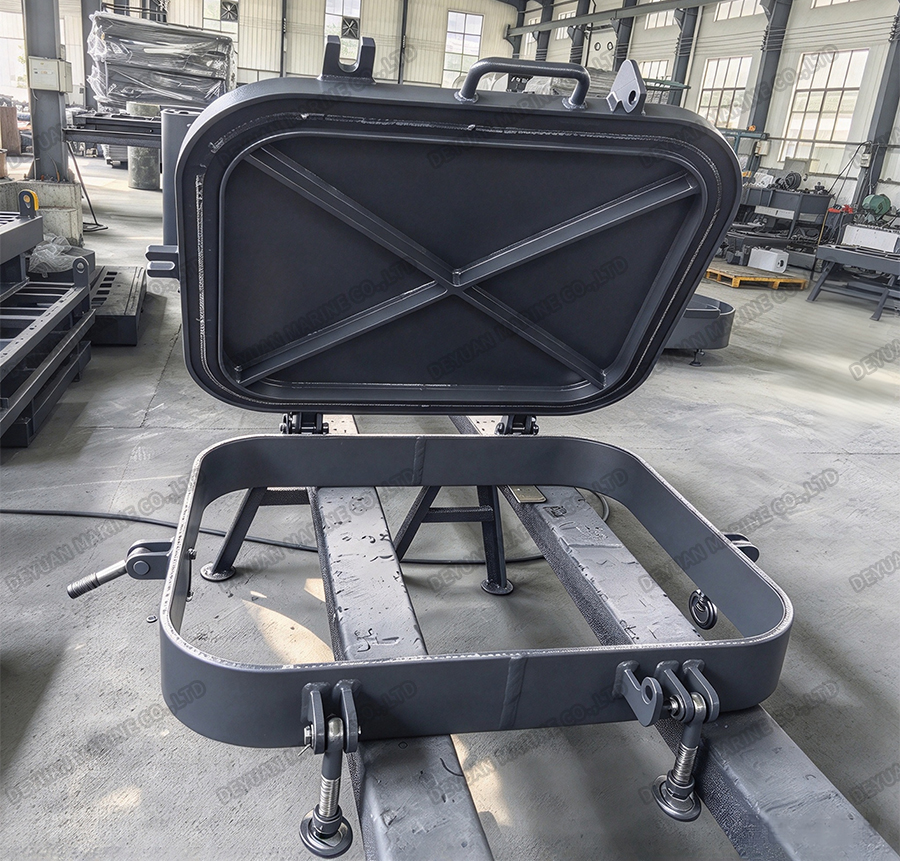
In the global shipping industry, the integrity of a vessel’s cargo hold is a non-negotiable requirement. Marine hatch covers—the large, heavy-duty steel lids that seal the openings on a ship’s weather deck—serve as the primary defense against seawater intrusion, protecting billions of dollars in cargo and ensuring the structural safety of the vessel itself.
A modern marine hatch cover is a complex piece of engineering. While functionally a cover, it must withstand the immense forces of boarding seas, resist corrosion from salt spray, and maintain a weathertight seal under the constant flexing of a ship at sea. The failure of a hatch cover to maintain watertight integrity can lead to catastrophic cargo damage, heavy fines from port authorities, and increased insurance premiums for shipowners.
Key Design and Performance Features:
Item | Specification |
Material | High-strength marine steel AH32 / AH36, fully certified mill certificates |
Deck load capacity | Designed to Load Line Convention (LL66), Position 1 — wheel load and stack load per client's loading manual |
Drive system | Hydraulic power unit, system pressure 16–28 MPa (160–280 bar) |
Opening time | Folding: 3–6 min; side-rolling: 2–4 min (per hatch) |
Weathertightness | Continuous EPDM / nitrile rubber gaskets; hose test or equivalent 0.2 bar pressure test |
Securing | Hydraulic and mechanical cleating / locking arrangements per IACS UR S21 |
Corrosion protection | Sand-blasted Sa 2.5, epoxy primer + topcoat per client specification |
Class compliance | Designed and approved per IACS member requirements (CCS, BV, LR, ABS, DNV, NK, RINA) |
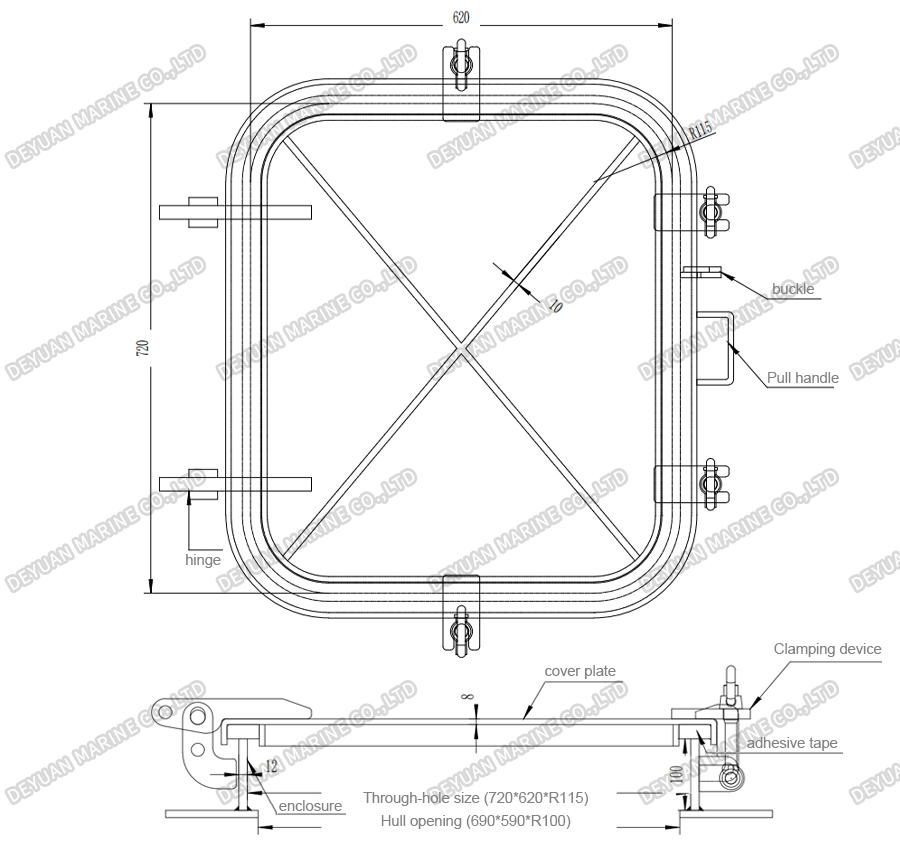
Drawing:
Frequently Asked Questions (FAQ)
Q1: Which type of hatch cover should I choose for a new bulk carrier?
Folding 2- or 4-panel covers are the default choice for most Handysize to Panamax bulk carriers because they open quickly, need no crane and leave the hatch opening clear for grabs. Side-rolling covers are preferred on larger Capesize / Newcastlemax vessels where unobstructed deck width during unloading is the priority. Pontoon covers suit smaller general cargo or heavy-lift ships that already carry a suitable deck crane.
Q2: How is weathertightness tested and certified?
Every cover undergoes a hose test (water spray under pressure) at the shipyard after installation, equivalent to the 0.2 bar pressure test referenced in IACS requirements. Gasket compression is set by adjustable cleats and checked during the sea trial. Class surveyors witness the hose test and sign off the hatch-cover survey report.
Q3: What hydraulic pressure and power supply are standard?
Typical system pressure is 16–25 MPa (160–250 bar), driven by an electric hydraulic power unit connected to the ship's 440 V / 60 Hz or 380 V / 50 Hz 3-phase supply. Pressure, flow and tank size are sized to meet the required opening time at the extreme low-voltage / cold-oil condition.
Q4: How long does a typical opening or closing cycle take?
Folding covers open or close in roughly 3–6 minutes per hatch, depending on panel size and hydraulic flow. Side-rolling covers cycle in about 2–4 minutes. These figures are for an empty, well-lubricated cover in normal condition; ice, grease degradation or loose rollers will slow operation.