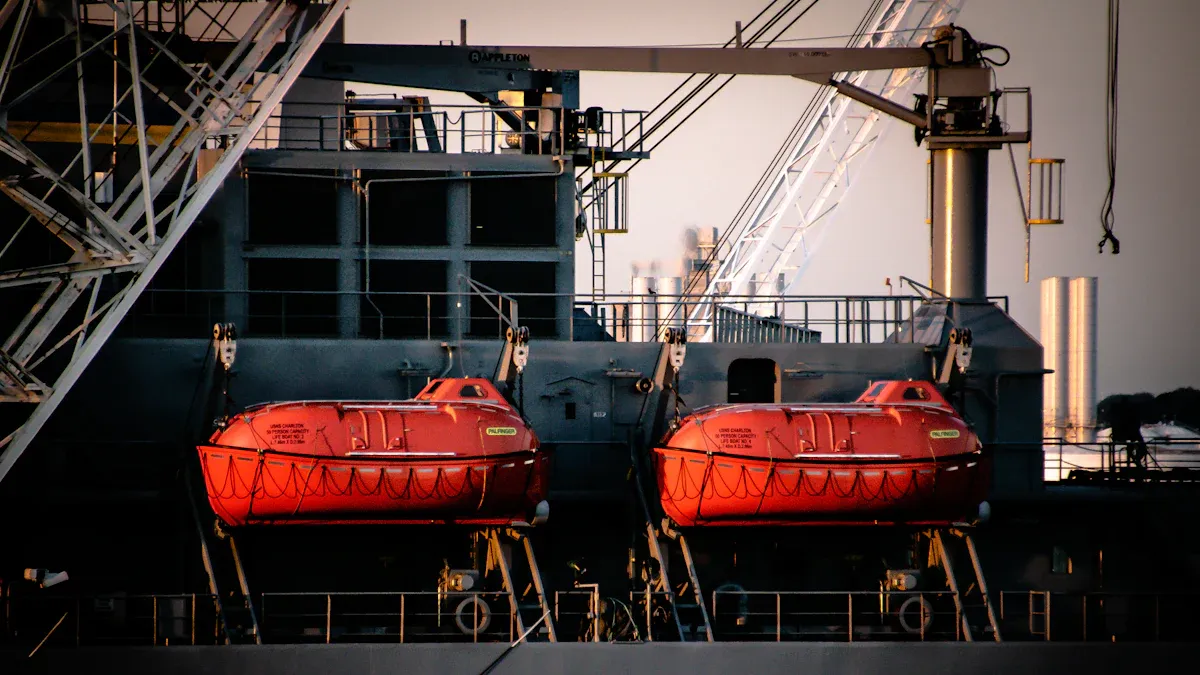
 English
 Views: 0 Author: Site Editor Publish Time: 2026-02-04 Origin: Site

Lifeboats help people escape safely when there is danger at sea. People rely on lifeboats to save lives during a rescue. Knowing about lifeboat types helps you follow safety rules and keep everyone safe. The International Maritime Organization (IMO) uses SOLAS rules. These rules make sure lifeboats can handle bad weather. Lifeboats must have things like life jackets and first aid kits.
Category | Explanation | Impact |
|---|---|---|
Reliability | Makes sure lifeboats are strong in storms and emergencies. | Helps people trust lifeboats in tough times. |
Passenger Safety | Requires lifeboats to have life jackets, first aid, and distress signals. | Keeps people safe when leaving the ship and helps them survive. |
Operational Readiness | Tells crews to check lifeboats, fix them, and train often. | Makes sure lifeboats work and can be used anytime. |
You can count on Deyuan Marine for lifeboats and safety gear that meet these rules.
Lifeboats help people leave ships safely in emergencies. Lifeboats are very important at sea. There are different lifeboats for different needs. Some lifeboats are open, some are partly covered, and some are fully covered. The type you need depends on the weather and how far you are from land. Lifeboats have safety items like life jackets and first aid kits. They also have ways to talk to others for help. These things help keep everyone safe. Lifeboats must be checked and fixed often. This makes sure they work when needed. Picking a lifeboat depends on your ship’s size and where it goes. You also need to think about how many people will use it. Deyuan Marine lifeboats follow world safety rules. This means they work well in hard situations. New lifeboats use lighter materials. They are made to be steady and work better. It is important to teach your crew how to use lifeboats. Crew should also learn how to take care of lifeboats. This helps everyone act fast in emergencies.
Image Source: pexels
Lifeboats are made in different types for rescue needs. Each type works best in certain places and situations. You can look at the table below to see the main types used in rescue missions:
Type | Description |
|---|---|
In-land | Used on lakes and rivers. |
In-shore | Designed for operations closer to shore. |
Off-shore | Built for deeper waters, capable of operating 150–250 nautical miles from shore, often called 'All-weather' lifeboats. |
Inflatable | Includes various types such as RIBs (Rigid-hulled Inflatable Boats) and RHIBs (Rigid-hulled Inflatable Boats). |
Motor Lifeboat | Designated for shore-based rescue operations, typically crewed by full-time personnel. |
Deyuan Marine sells many lifeboats. They have open, partially enclosed, and totally enclosed models. All these lifeboats follow international rules. This helps you get ready for emergencies at sea.
Open lifeboats are simple. These boats do not have a roof or cover. You can lower them by hand. Most open lifeboats use oars or small motors to move. Their easy design makes them good for calm water and short trips. Fishing boats and small ships use open lifeboats for fast escapes.
Feature/Advantage | Description |
|---|---|
Simpler Deployment | Open lifeboats have easier manual lowering mechanisms for deployment. |
Propulsion | They may use oars or small outboard motors for movement. |
Cost-Effectiveness | Lower upfront costs make them suitable for vessels in calmer waters. |
Maintenance | Their simple design leads to easier maintenance with fewer components. |
Suitability for Conditions | Best for calm waters and short distances, ideal for small coastal ships. |
Usage | Commonly used on fishing vessels and for short-term evacuations. |
Open lifeboats have basic safety gear like life jackets and first aid kits. The open top lets people get in fast and grab supplies. But these boats work best when the weather is nice and the trip is short.
Partially enclosed lifeboats protect you more than open ones. These boats have a roof that covers most seats. There are small holes for air and getting in. The roof keeps out wind, rain, and cold. Each person has a safety harness. There are also places to store survival items. The air holes help keep the inside fresh.
You can use these lifeboats for longer rescues or bad weather. The roof keeps you dry and comfortable while you wait for help. Life jackets and first aid kits are easy to find. These boats are a safe pick for many ships.
Tip: Partially enclosed lifeboats let you see outside and stay comfortable, even when the weather is bad.
Totally enclosed lifeboats give the most protection. You stay safe from rain, wind, and waves inside a strong shell. These lifeboats are made from tough materials for rough seas. The design keeps everyone dry and safe, even on long rescues.
Standard | Description |
|---|---|
SOLAS | Safety of Life at Sea regulations governing lifeboat safety and design. |
IMO | International Maritime Organization regulations ensuring compliance in maritime operations. |
Deyuan Marine makes totally enclosed lifeboats that meet SOLAS and IMO rules. This means you can trust these lifeboats in emergencies.
You should pick totally enclosed lifeboats for far-away rescues. These boats are best for places far from land where weather can change fast. Oil rigs and big ships use them to keep people safe until help comes.
Note: Deyuan Marine’s lifeboats are approved by top groups and built to work well in hard conditions.
Free fall lifeboats let you leave a ship fast and safely in an emergency. These lifeboats sit on a slanted ramp at the back of the ship. You and your crew get inside and sit in special seats. The seats hold you in place. When everyone is ready, the lifeboat drops and slides down the ramp. Gravity helps it move quickly into the water. The lifeboat goes away from the ship right away. You do not need ropes or slow machines. This quick launch helps you escape danger fast and safe.
Tip: The ramp pushes the lifeboat forward so it moves away from the ship and any dangers in the water.
You use free fall lifeboats when there are sudden problems like fire, explosions, or sinking ships. These lifeboats work well in rough water and bad weather. The strong cover keeps out wind, rain, and waves. Big ships and oil rigs use free fall lifeboats for their crews. You can trust these lifeboats to keep you safe until help comes.
Feature | Benefit |
|---|---|
Enclosed Structure | Keeps you safe from bad weather and waves |
Gravity Launch | Makes sure the lifeboat drops fast and works |
Forward Motion | Moves lifeboat away from ship right away |
Strong Materials | Stays strong in tough weather |
Inflatable lifeboats are light and easy to carry in emergencies. You can keep them in small spaces on your boat or ship. When you need them, you fill them with air fast. This makes them simple to use, even if you do not have many people to help. The inflatable sides help the lifeboat float, even with lots of people inside.
People use inflatable lifeboats for fun boating, rescue jobs, and military work. These lifeboats help you save people in the water quickly. They are good for short rescues and can handle rough water for a little while. Many rescue teams pick inflatable lifeboats because they are fast to use and easy to move.
They float well and stay steady, which is good for rescues.
You can use them fast in emergencies.
They fit on both small boats and big ships.
Military and coast guard teams use them for quick help.
Note: Inflatable lifeboats have some problems. The inflatable sides take up space on the deck. Sharp things can poke holes in them. Sunlight can make them weak over time. You should check and fix them often to keep them ready for rescue.
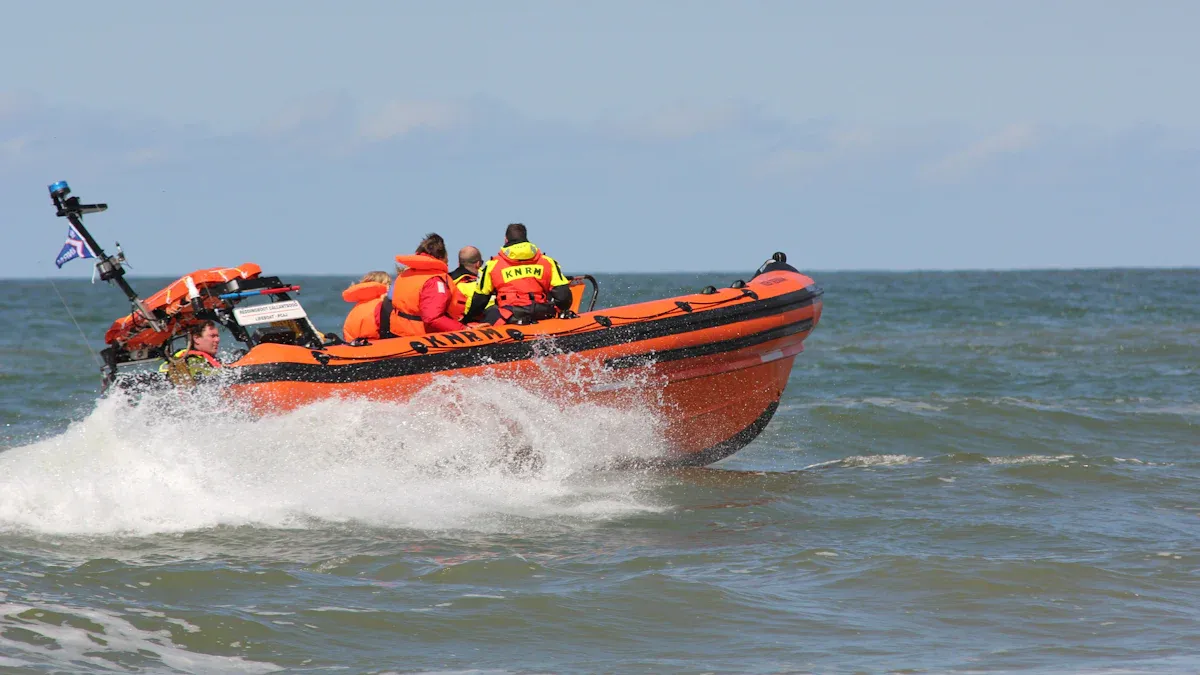
Image Source: pexels
When you learn about rescue at sea, you will notice that not all boats do the same job. Lifeboats and rescue boats look different and are used for different things. It is important to know how they are not the same so you can pick the right boat.
Feature | Rescue Boats | Lifeboats |
|---|---|---|
Size | 4 to 8.5 meters | 5 to over 20 meters |
Passenger Capacity | 3-15 persons | Up to 150 persons |
Construction Materials | Inflatable rubber, synthetic, aluminum, fiberglass, composites | Rigid hulls, fire-retardant, non-combustible |
Propulsion | Mild or no propulsion | Dedicated engines or motors |
Survival Provisions | Minimal, for short-term rescue | Extensive, for long-term survival |
Intended Use | Quick rescue, immediate response | Evacuation, long-term survival |
Rescue boats are made for fast help and short rescues. Lifeboats are for getting people off a ship and keeping them safe for a long time. Deyuan Marine makes many rescue boats that follow strict safety rules. You can trust these boats to work well in rescues.
Fast rescue boats are very important in rescue work today. You can use them to get to people who need help quickly. These boats go fast and turn easily, even when the water is rough. Their shape helps you act fast in emergencies.
Fast rescue boats help you find and help people in trouble.
You can use them to answer calls for help and look for missing people.
They are good for taking sick or hurt people from ships or oil platforms.
These boats are easy to put in the water and have good safety tools.
You see fast rescue boats in many rescue jobs, like searching for people, helping after disasters, and working far from land. Their speed and easy turning make them great for picking up people from the water or for short rescues. You can count on them to help fast when it matters most.
Rigid inflatable boats, called RIBs, have a hard bottom and soft sides. This makes the boat strong and hard to sink. The soft sides have many air chambers, so if one breaks, the boat still floats. RIBs are lighter than boats with only hard parts, so they are easy to move and put in the water.
You can use RIBs for many rescue jobs. Their low floor and wide shape keep them steady, even in big waves up to four meters. The soft sides act like cushions, so the crew does not get as tired in rough water. RIBs work well far from shore and have special papers for use in strong wind and tough places.
Davit-launched rescue boats use special cranes called davits to lower them into the sea. This lets you put bigger boats in the water quickly and safely, even from large ships or oil rigs. Double-arm swivel davits can hold heavier boats, which is good for big ships.
Advantage | Description |
|---|---|
Operational Efficiency | Davit-launched boats help you be ready for rescue at sea. |
Compliance with Safety Regulations | These boats help you follow strict sea safety rules. |
Deployment of Larger Boats | You can put bigger rescue boats in the water, which helps large ships. |
You can use davit-launched rescue boats on many kinds of ships. They fit well on big ships that must be ready for rescue at any time. Deyuan Marine makes these boats to meet world safety rules, so you know they are safe and strong.
Deyuan Marine uses strong materials and checks their boats carefully. Their rescue boats are tough, steady, and quick to use. You get help from the first talk to after you buy and train your crew.
You want a lifeboat that keeps you safe. Deyuan Marine makes lifeboats with safety as a top goal. Each lifeboat has special features for emergencies at sea.
Every Deyuan Marine lifeboat has buoyancy aids. These help the boat float, even if water gets inside. Polyurethane foam fills the lifeboat’s compartments. The foam keeps the boat steady and helps people stay above water. You can count on these aids in hard situations.
Sometimes you must leave your ship at night or in storms. Deyuan Marine lifeboats have emergency lights. These lights help you see inside the boat and find gear. The lights also make the lifeboat easy to see from far away. You will not be left in the dark.
It is important to talk to others during a rescue. Deyuan Marine lifeboats have communication systems. You can use radios or signals to call for help. These tools help rescuers find you fast. You stay connected and get help sooner.
Deyuan Marine uses strong materials for their lifeboats. These materials help the boats last long and keep you safe.
Material | Contribution to Durability and Safety |
|---|---|
Gives strength and stands up to tough sea conditions | |
Polyurethane Foam | Adds buoyancy, making the boat float better |
FRP (Fiber Reinforced Plastic) makes the lifeboat’s shell strong. It can handle saltwater, sun, and big waves.
Polyurethane foam gives extra buoyancy. The boat floats, even if it gets damaged.
You need a lifeboat that can handle rough water. FRP makes the lifeboat strong and hard to break. Polyurethane foam keeps the boat floating, even if the hull cracks. These materials work together to protect you and your crew.
Deyuan Marine builds lifeboats that follow world safety rules. Every boat meets SOLAS and IMO standards. This means the lifeboat passes tough tests for safety and quality.
Deyuan Marine gives you more than just lifeboats. You can get extra tools and accessories to keep your lifeboat ready.
You must check and fix your lifeboat often. Deyuan Marine gives you tools for easy maintenance. These tools help you keep the lifeboat in good shape. Regular checks make sure your lifeboat works when you need it.
Getting a lifeboat into the water fast can save lives. Deyuan Marine has davits and launching systems. These systems help you lower the lifeboat quickly and safely. You can trust these tools in emergencies.
Tip: Check your lifeboat often and use the right accessories. This helps your lifeboat stay ready for any rescue.
Deyuan Marine uses strong materials and good safety features. You get help with maintenance and launching, so you can feel safe at sea.
Picking the right lifeboat is very important for safety at sea. You need to think about where you will use the lifeboat. You also need to know how many people it must hold. There are rules you must follow for lifeboats. Deyuan Marine can help you pick the best lifeboat for your ship.
First, look at where your ship goes. Offshore lifeboats are good for ships far from land. These lifeboats are strong and can handle big waves. They also work well in storms. Inshore lifeboats are better for calm water near the coast. They are lighter and easy to put in the water fast. If your ship goes both near and far, you may need a lifeboat for both places.
Weather is important when you choose a lifeboat. If you see storms, strong winds, or cold weather, you need a lifeboat with a strong cover. Good insulation helps keep you warm. Totally enclosed lifeboats protect you from bad weather. Open or partially enclosed lifeboats are good for nice weather. Always pick a lifeboat that can handle the worst weather you might see.
Your lifeboat must fit everyone on your ship. The number of seats should match the number of people. Lifeboats come in many sizes. You can pick one that fits your ship.
There are rules from groups like the International Maritime Organization and SOLAS. These rules say what your lifeboat must have. They tell you how many people it must carry. They also say what type you need and how strong it must be. The table below shows some important rules:
Requirement | Description |
|---|---|
Minimum Capacity | Every vessel must carry enough lifeboats to accommodate all persons on board. |
Type of Lifeboat | The type of lifeboat is determined by the ship’s design and operational conditions. |
Construction Standards | Lifeboats must be strong, buoyant, and able to withstand extreme sea conditions. |
Evacuation Capability | Passenger ships must have lifeboats with enough total capacity for full evacuation. |
Deyuan Marine makes lifeboats that follow these rules. You can trust your ship will meet the standards.
Your crew must learn how to use and care for the lifeboat. Training teaches them to check, clean, and fix the lifeboat. Well-trained crews can launch lifeboats fast and safely in an emergency.
You should think about how much it costs to keep your lifeboat ready. Cleaning and oiling the parts stops rust and damage. Keeping good records helps you find problems early. The table below lists things to remember:
Consideration | Description |
|---|---|
Maintenance Practices | Regular cleaning and lubrication are necessary to prevent corrosion and ensure proper function. |
Crew Training | Crew members must be trained in inspection, cleaning, lubrication, and repair of lifeboats. |
Record-Keeping | Keeping detailed maintenance records is essential for compliance and equipment history. |
Prompt Repair | Issues found during inspections should be addressed quickly to avoid serious problems. |
Tip: Deyuan Marine can help you pick, care for, and use your lifeboat. You can trust their advice to find the right lifeboat for your rescue needs.
Deyuan Marine always tries to make lifeboats safer and better. They do this by working together and listening to what customers want. Lifeboat design changes as new materials and smart systems are made. These updates help keep you safe during rescues and also protect nature.
You want lifeboats that are easy to move and launch. New lifeboats use materials that are strong but not heavy. This makes them easier to use and helps them float well. The table below shows how each material helps:
Material Type | Benefits |
|---|---|
Aluminum Alloys | Lightweight, corrosion-resistant, strong for tough jobs. |
Fiber-Reinforced Polymers (FRP) | Durable, light, resists impact and corrosion. |
Advanced Polyurethane Foam | Adds buoyancy and insulation without much weight. |
Carbon Fiber Composites | Very light, strong, resists damage from sun and water. |
Aluminum alloys and FRP make lifeboats simple to launch. Polyurethane foam helps lifeboats float, even if they get holes. Carbon fiber composites make lifeboats last longer and stay strong.
Lifeboats need to stay steady in rough water. New hull shapes use computers to make them more stable. Designers use special hulls and smart weight systems. These changes help lifeboats stay upright and keep you safe.
Modern lifeboats can flip back if they turn over. Self-righting uses special hulls, gyroscopes, and smart sensors. These systems help lifeboats get upright fast in big waves. You get more safety and a better chance to survive.
Safety Enhancement | Description |
|---|---|
Gyroscopic Stabilization Technology | Controls roll and helps lifeboat turn upright after capsizing. |
Real-time Orientation and Control Sensors | Monitors movement and triggers support systems during emergencies. |
Advanced Buoyancy Materials | Uses closed-cell foams and composites for better floating and self-righting. |
Hydrodynamic Hull Design Using CFD | Shapes hull for faster recovery in rough seas. |
Intelligent Ballast Systems | Adjusts weight to help lifeboat right itself. |
Some lifeboats launch by themselves with just a button. This saves time and makes work easier for the crew. Smart technology tracks where the lifeboat is and sends signals for help. Radios and GPS help rescuers find you faster.
You care about the ocean and want lifeboats that do not hurt nature. Makers use recyclable materials like stainless steel, aluminum, and natural fibers. Linear Low-Density Polyethylene (LLDPE) is good because you can recycle it when the lifeboat is old. These materials help cut down on waste and pollution.
Designers make lifeboats that use less energy and last longer. Electric lifeboats make less pollution. Smart designs make it easier to take care of lifeboats, so they stay safe for many years. Companies now follow ESG rules to protect nature and show they care about the planet.
Tip: When you pick a lifeboat, look for eco-friendly materials and energy-saving systems. This helps you protect the sea and stay safe.
Deyuan Marine leads in making new lifeboats. You get lifeboats with strong materials, smart safety features, and designs that are good for nature. These changes help you stay safe in rescues and care for the ocean.
You now know about many lifeboats and rescue boats. Each one has special features for different needs. The table below gives you important facts to help you pick the best lifeboat:
Key Consideration | Lifeboat Type Examples | Application Context |
|---|---|---|
Vessel Type | RIBs, Enclosed Models | Offshore platforms, all-weather needs |
Operational Conditions | Varies by vessel | Cargo ships need agility and load capacity |
Compliance | IMO, SOLAS standards | All vessels must meet safety rules |
Safety Features | Self-righting, Self-bailing | Crew safety during launch |
Picking the right lifeboat keeps people safe and follows the rules. You should ask experts like Deyuan Marine for help. They can explain safety rules, new lifeboat designs, and any changes in the law. Check out Deyuan Marine’s lifeboats to keep your crew and ship safe.
A lifeboat helps you evacuate and survive for a long time. A rescue boat helps you reach people quickly and bring them to safety. Lifeboats focus on survival. Rescue boats focus on speed.
You should look at your ship’s size, where you travel, and how many people you need to protect. Check safety rules like SOLAS and IMO. Deyuan Marine can help you match lifeboats to your needs.
You get buoyancy aids, emergency lights, and communication systems. Each lifeboat includes life jackets and first aid kits. These features help you stay safe during emergencies.
You should inspect your lifeboat every month. Clean and check all parts. Fix any problems right away. Regular maintenance keeps your lifeboat ready for rescue.
Yes, totally enclosed and free fall lifeboats from Deyuan Marine can handle storms and high waves. Strong materials and smart designs keep you safe in tough conditions.
Yes, Deyuan Marine lifeboats meet SOLAS and IMO standards. You can trust their lifeboats to pass strict safety tests and keep you compliant.
A free fall lifeboat launches quickly from a ramp. You use it when you need to escape fast, like during fires or explosions. It moves away from danger right after launch.
Yes, Deyuan Marine offers expert advice and support. You get help with selection, installation, and training. Their team guides you through every step.