 English
  |
Product Description
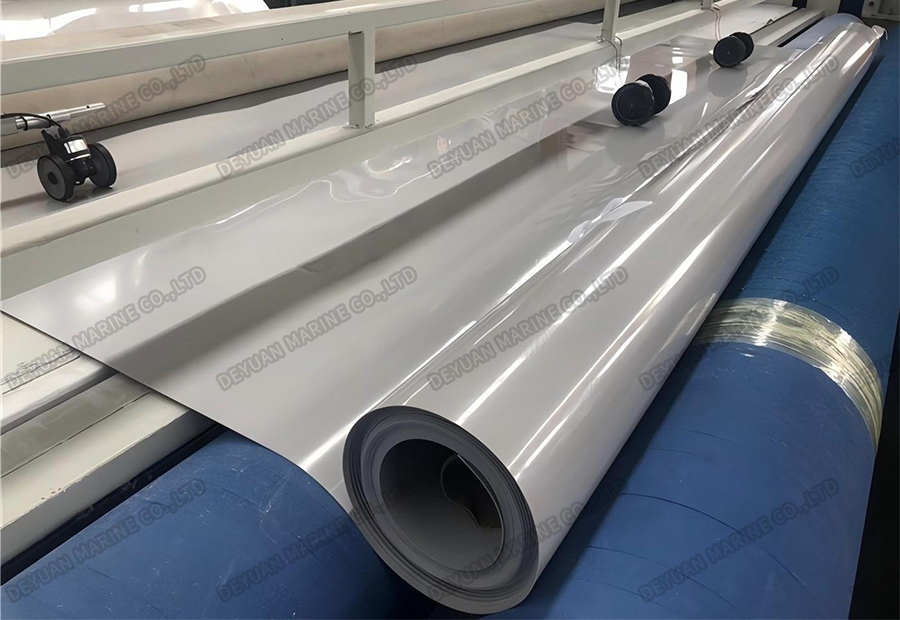
Tunnel Waterproof Plate
Product Introduction:
The tunnel waterproof plate production process adopts the domestic advanced two-co-extrusion single-screw extrusion production line. The raw material is added with reinforcing agent and antioxidant, and then undergoes heating melting, plasticization, extrusion, forming and traction. It can also be thermally compounded with the geotextile by hanging the suspension belt to form a composite waterproof plate.The extrusion calendering method can also be used, that is, the resin extruder melts and plasticizes the material, and the molten sheet is extruded from the die of the machine head and fed into the calendering unit. Then, it is rolled and cooled into a film, or fused with the geotextile through the sling, and then cooled and compounded into a composite waterproof sheet.
Performance Characteristics:
Resistant to chemical corrosion and ultraviolet radiation;Aging resistance,good wear resistance;Strong puncture resistance;Construction is simple and pollution-free.
Function And Use:
New railway, highway, municipal road, light rail transit construction (including bridge deck, tunnel), roof, underground engineering waterproofing, water conservancy construction, sewage treatment engineering, chemical acid and alkali treatment pond and other engineering seepage resistance, corrosion resistance, liner use.
Technical Indicators:
EVA waterproof Plate for Tunnel GB18173.1-2012:
| No. | Item | Unit | technical data | |
| 1 | tensile strength | normal temperature(23℃) | Mpa | ≥16 |
| high temperature(60℃) | Mpa | ≥6 | ||
| 2 | tensile elongation | normal temperature(23℃) | % | ≥550 |
| low temperature(- 20℃) | % | ≥350 | ||
| 3 | tear strength | kN/m | ≥60 | |
| 4 | antipermeability | 30min | 0.3MPa no leaking | |
| 5 | Low temperature bend | / | -35℃ no crack | |
| 6 | Heat expansion | elongation | mm | ≤2 |
| contraction | mm | ≤6 | ||
| 7 | air aging(80℃×168h) | rate of tensile strength | % | ≥80 |
| rate of break tensile strength | % | ≥70 | ||
| 8 | anti-alkali(Ca(OH)₂ 23℃×168h) | rate of tensile strength | % | ≥80 |
| rate of break tensile strength | % | ≥90 | ||
| 9 | artificial climate aging | rate of tensile strength | % | ≥80 |
| rate of break tensile strength | % | ≥70 | ||
| 10 | Bond peel strength | standard test | N/mm | ≥1.5 |
| soaking rate(23℃×168h) | % | ≥70 | ||